Menken/Maas
Films
- Read More
 Experimental
Geography of the Body
Willard Maas16mm, black and white, sound, 7 minRental format: 16mm - Read More
 Experimental
Visual Variations On Noguchi
Marie Menken16mm, black and white, sound, 4 minRental format: 16mm - Read More
 Experimental
Mechanics of Love
Willard Maas16mm, black and white, sound, 7 minRental format: 16mm - Read More
 Experimental
Eye Music in Red Major
Marie Menken16mm, color, silent, 5.5 minRental format: 16mm - Read More
 Experimental
Bagatelle for Willard Maas
Marie Menken16mm, color, sound, 5 minRental format: 16mm - Read More
 Experimental
Andy Warhol's Silver Flotations
Willard Maas16mm, color, sound, 4 minRental formats: 16mm, Digital file - Read More
 Experimental
Andy Warhol
Marie Menken16mm, color, silent, 22 minRental format: 16mm - Read More
 Experimental
Excursion
Marie Menken16mm, color, silent, 5.13 minRental format: 16mm
Description
Two formidable figures in New York's underground film scene, whose legendary partnership purportedly inspired Edward Albee’s WHO’S AFRAID OF VIRGINIA WOOLF?, Marie Menken and Willard Maas forever changed the trajectory of American avant-garde cinema with a series of poetic and painterly films that revolutionized the possibilities of the medium.
Marie Menken and Willard Maas rarely worked together, though they inhabited (and in many ways inspired) the same fruitful experimental film scene in NYC that began in the 1940s and reached its apotheosis in the 1960s with the creation of The Film-Makers' Cooperative and the birth of the movement known as the "New American Cinema." Menken in particular exerted an enormous influence on an entire generation of avant-garde filmmakers and fine artists. A friend and colleague of the Coop's de facto leader, Jonas Mekas, Menken was a key mentor to such artists as Gerard Malanga and Roger Jacoby. She was also the person responsible for teaching Andy Warhol how to operate a hand-cranked 16mm Bolex camera. Menken and Maas eventually became regulars at Warhol's "Factory" and documented the artist's creative process in a series of indelible shorts. They were even the subject of two of Warhol's legendary “screen tests.”
Born in Brooklyn, New York to Lithuanian immigrant parents, Menken studied at the New York School of Fine and Industrial Arts and worked predominantly as a painter. She met Maas in 1931, who had recently relocated to the Big Apple from his native California to study at Columbia University. The two married in 1937 and by the mid-1940s had formed the avant-garde art collective The Gryphon Group. Around this time, Menken began to grow restless with the limitations of painting, and in 1966 was quoted as saying, "There is no ‘why’ for my making films. I just liked the twitters of the machine, and since it was an extension of painting for me, I tried it and loved it. In painting I never liked the staid and static, always look[ing] for what would change the source of light and stance, using glitters, glass beads, luminous paint, so the camera was a natural for me to try—but how expensive!"
Menken's films exemplify many tenets of painting (light, color, texture) and amplify these qualities through motion. She eventually became renowned for kinetic (and at times frenetic) handheld cinematography, which brought an electrifying visual dynamism to her work. For example, her 1945 solo debut Visual Variations on Noguchi (filmed in sculptor Isamu Noguchi's studio) was described by Menken as her attempt to "capture the flying spirit of movement within [Noguchi's sculptural] objects." As noted by Stan Brakhage, one of Menken's peers and admirers: "Visual Variation on Noguchi liberated a lot of independent filmmakers from the idea that had been so powerful up to then, that we have to imitate the Hollywood dolly shot, without dollies—that the smooth pan and dolly was the only acceptable thing. Marie's free, swinging, swooping hand-held pans changed all that, for me and for the whole independent filmmaking world."
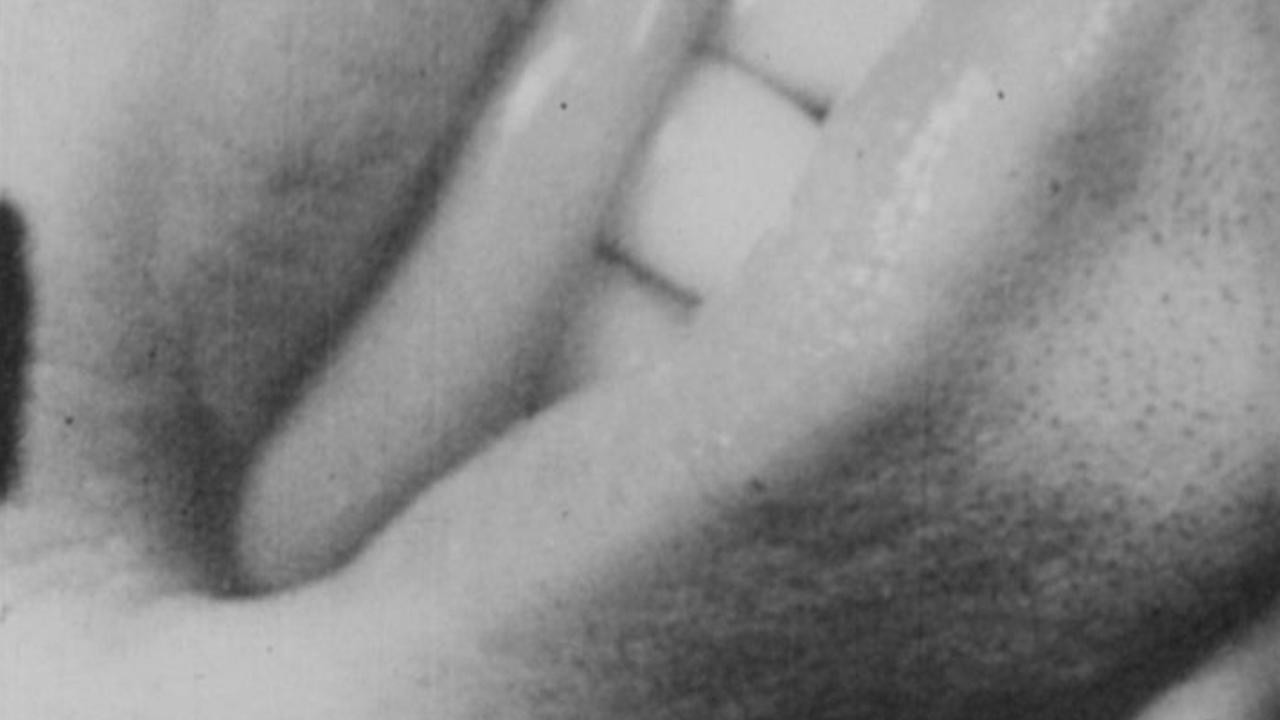
Whereas Menken emerged from the painting world and both employed and exploded the medium's principles in her filmmaking, Maas came from a background in poetry; his films thereby exemplify this sensibility. For instance, 1943's Geography of the Body (a collaboration with Menken) features commentary by British poet George Barker, and is described as "an analogical pilgrimage evok[ing] the terrors and splendors of the human body as the undiscovered, mysterious continent [wherein] extreme magnification increases the ambiguity of the visuals [and] tongue-in-cheek commentary counteracts or reinforces their sexual implications... the method is that used by the imagist-symbolist poet." 1955's The Mechanics of Love, a collaboration with Ben Moore that features an original zither score by John Gruen, was similarly described as depicting "the act of love portrayed through poetic symbols."
By the early 1960s, Menken and Maas had become giants in the New York avant-garde film community and were key players in the founding of The Film-Makers' Cooperative in 1961. Their films (currently available from the Coop on both 16mm and digital formats) have remained cornerstone titles in our collection for decades. We are pleased to present a selection of these great artists' work in the curated package Menken & Maas, which is now available for rental at a discounted rate!
To inquire about renting or licensing this film package, please write to info@film-makerscoop.com, or fill out our booking form below.